Why Your To-Do List Isn’t Working (and What to Use Instead)
Most people don’t have a productivity problem. They have a prioritization problem—hidden inside a to-do list. On the surface, a to-do list feels like control. You write everything down, stay organized, and check things off. It looks like progress. But if you’ve ever ended the day feeling busy and behind, you’ve already seen the flaw: A to-do list tracks activity. It does not drive results.
The To-Do List Trap
A traditional to-do list treats everything as equal.
- Replying to an email.
- Starting a major project.
- Scheduling a meeting.
- Making a high-impact decision.
They all sit side by side. So naturally, you gravitate toward:
- what’s quick
- what’s easy
- what feels urgent
Not what actually moves things forward. And because checking things off feels good, your brain reinforces the behavior. You get a small sense of accomplishment—even when you’re avoiding the work that matters most. By the end of the day, the list is shorter. But the important work is still untouched.
Why More Organization Doesn’t Fix It
Most advice tries to improve the list:
- better apps
- better formatting
- better task breakdowns
But the problem isn’t how your list looks. It’s how you’re using it.
A to-do list is reactive by design. It collects everything that shows up—requests, ideas, interruptions—without questioning whether it should be done at all. That’s why it often becomes a record of other people’s priorities instead of your own.
Real progress requires a different question:
Not “What needs to get done?”
But “What actually matters right now?”
What to Use Instead: A Simple Strategic Framework
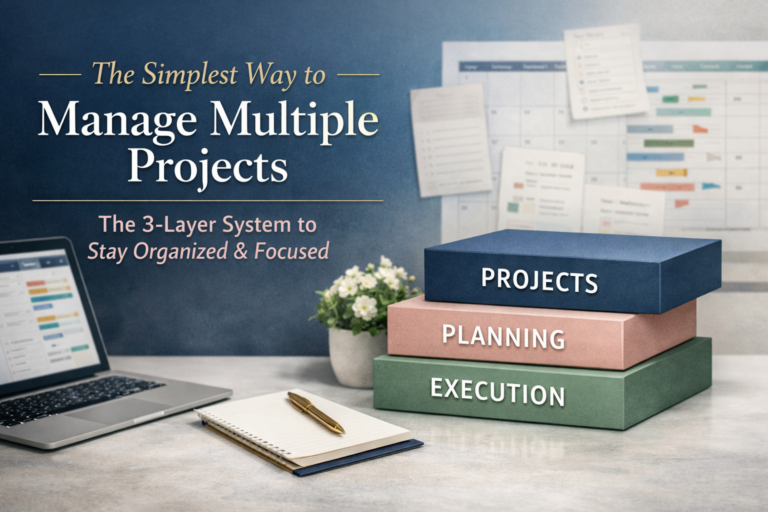
If you want to stop feeling busy and start making real progress, you need structure—not more tasks. Think in three layers:
1. The North Star (What Actually Matters)
Before you plan your day, define your direction. What are the 1–3 outcomes that actually move things forward this quarter, this month, or even this week? Not tasks—results.
Examples:
- Complete a proposal that drives revenue
- Fix a broken workflow
- Make a decision that removes a bottleneck
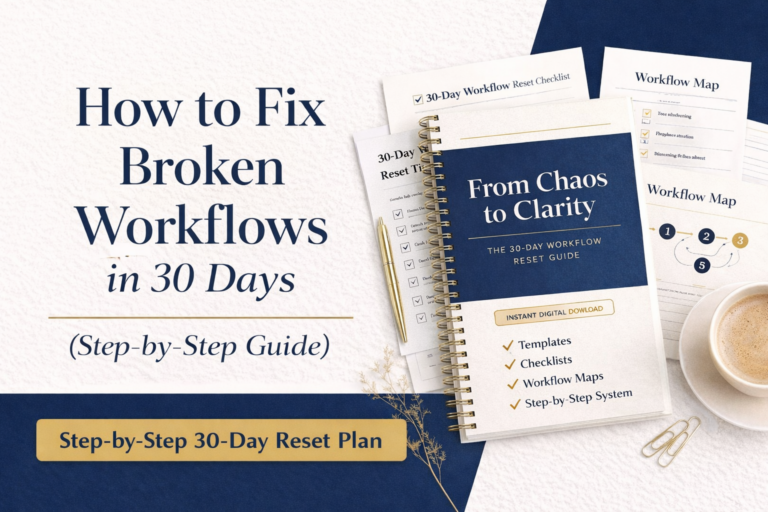
This is your filter. If something doesn’t support these outcomes, it’s not a priority—it’s maintenance. If you’re struggling to identify what your “North Star” should be, the FREE From Chaos to Clarity framework is designed to help you simplify your work, clarify your priorities, and focus on what actually moves things forward.
2. The Filter (What Deserves Your Time)
Once you know what matters, you need a way to evaluate everything else. A simple way to think about it:
- Important + Urgent → handle it
- Important + Not Urgent → schedule it (this is where real progress happens)
- Not Important + Urgent → minimize or delegate
- Not Important + Not Urgent → eliminate
Most people spend their time reacting to urgency. Strategic thinkers protect time for importance.
3. The Rule of Three (Daily Execution)
This is where everything changes. Instead of writing a list of 15–20 tasks, identify just three things that must get done today to move your priorities forward. That’s it. Not emails. Not admin work. Not filler tasks. Three meaningful actions. If you complete those, the day was productive—even if everything else didn’t get finished.
The Shift That Actually Creates Progress
At first, this approach feels uncomfortable. You’ll notice:
- fewer tasks getting checked off
- more things left undone
- more intentional decisions about your time
But something important happens: You stop measuring productivity by volume and start measuring it by impact.
And that’s where real progress lives.
The Hidden Problem: Urgency Bias
One of the biggest reasons people fall back into to-do list thinking is urgency. Urgent tasks feel important—even when they’re not.
Emails. Messages. Last-minute requests. They create pressure, and pressure drives action. But if you don’t actively protect time for important work, it will always get pushed aside. That’s why strategic work has to be scheduled—not squeezed in.
What Strategic Thinkers Do Differently
They don’t just manage tasks. They manage attention. They:
- decide what matters before the day starts
- limit how much they take on
- ignore or delay low-value work
- focus on finishing high-impact actions
They’re not trying to clear the list. They’re trying to move something meaningful forward.
A Simple Way to Start Today
Take your current to-do list. Now ask one question:
“Which three of these would actually make a difference a week—or a year—from now?”
Circle those. Do those first. Everything else can wait.
Final Thought
A to-do list isn’t useless. It’s just incomplete. It tells you what exists. It doesn’t tell you what matters. And without that distinction, you’ll always default to what’s easy, visible, or urgent—rather than what creates results.
You don’t need a better list. You need a better filter. Because productivity isn’t about doing more. It’s about making sure what you do actually counts.