What to Track During a Job Search
A job search can quickly become overwhelming. Between applications, networking conversations, interviews, follow-ups, and deadlines, it’s easy to lose track of important details. One missed email or forgotten follow-up can cost you an opportunity.
That’s why successful job seekers don’t rely on memory alone — they rely on systems.
Tracking your job search helps you stay organized, focused, and proactive. It also reduces stress because you always know where you stand and what needs your attention next.
Why Tracking Your Job Search Matters
When you actively track your job search, you can:
- Avoid duplicate applications
- Remember important interview details
- Follow up professionally and on time
- Identify patterns in responses
- Measure what strategies are working
- Stay motivated with visible progress
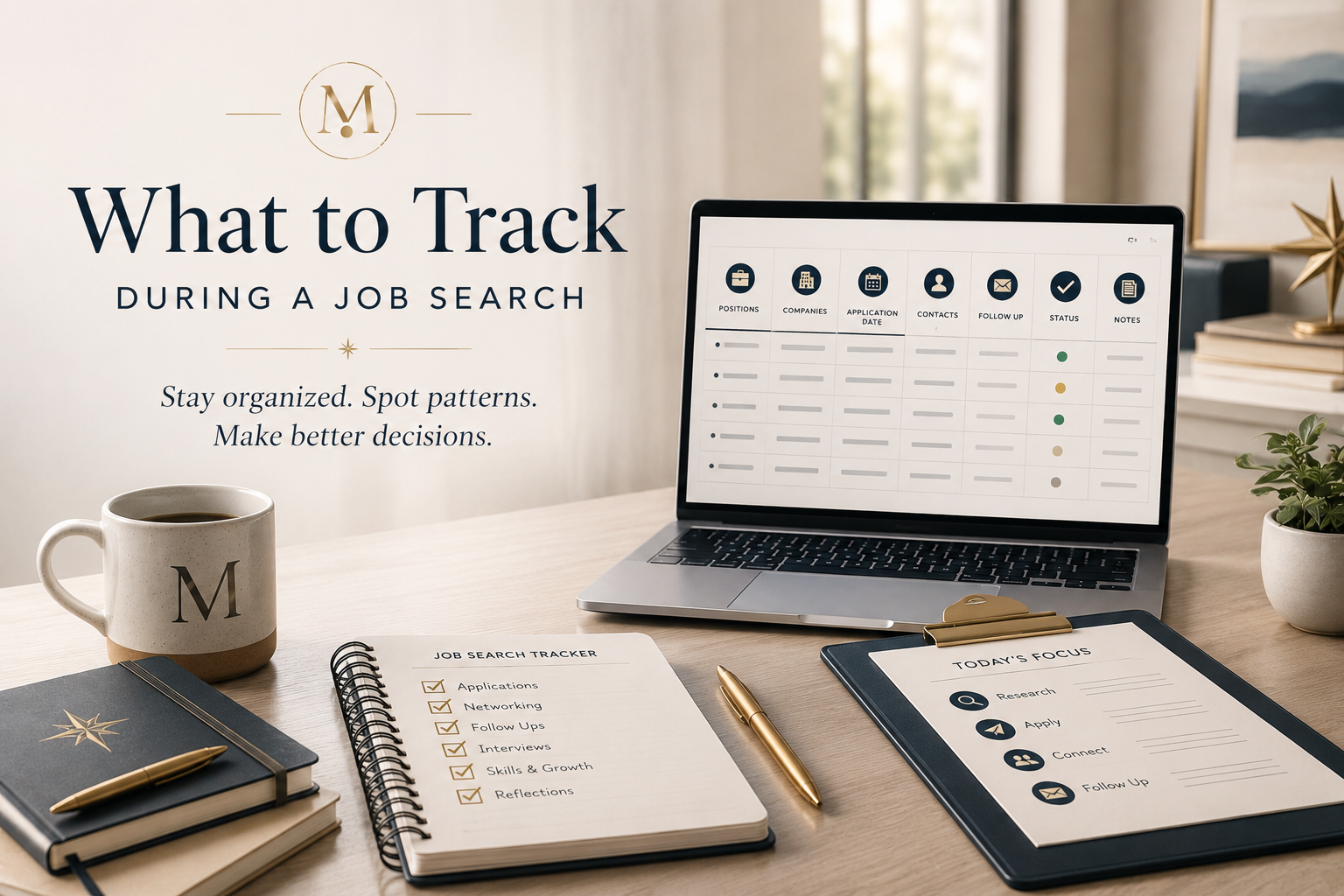
A simple spreadsheet can help, but a structured toolkit designed specifically for job seekers can make the process significantly easier.
The Ultimate Job Search Toolkit includes templates and trackers that help organize every stage of the search process.
 1. Applications Submitted
The first thing you should track is every position you apply for.
Include:
- Company name
- Job title
- Date applied
- Source of the listing
- Salary range (if available)
- Resume version used
- Cover letter submitted
- Application status
This prevents confusion later, especially when recruiters contact you weeks after you applied.
Pro Tip
Save a copy of every job description. Companies often remove listings after applications close, and you may need the details during interviews.
2. Networking Contacts
Many opportunities come through networking before they’re publicly posted.
Track:
- Contact name
- Company
- Role/title
- Date connected
- Where you met
- Follow-up dates
- Notes from conversations
This helps you build genuine professional relationships instead of sending disconnected messages.
Networking tracking is especially valuable during long job searches because relationships often develop over time.
3. Interview Details
Interviews can blur together quickly when you’re applying to multiple roles.
Keep records of:
- Interview dates and times
- Interviewer names and titles
- Interview format (phone, Zoom, in-person)
- Questions asked
- Your responses
- Topics discussed
- Next steps mentioned
After each interview, write notes immediately while everything is still fresh.
These notes help you:
- Prepare for future rounds
- Send personalized thank-you messages
- Improve interview performance over time
4. Follow-Ups and Communication
Following up professionally can set you apart from other candidates.
Track:
- Thank-you emails sent
- Recruiter responses
- Follow-up reminders
- Response deadlines
- Requested documents
- Assessment completion dates
Without a tracking system, follow-ups are often forgotten.
A consistent follow-up process demonstrates professionalism, communication skills, and attention to detail.
 5. Resume Versions and Customizations
Most successful job seekers tailor resumes to specific roles.
Track:
- Resume file names
- Versions submitted
- Keywords added
- Industries targeted
- Skills emphasized
This becomes critical if a recruiter references a version you submitted weeks earlier.
Organized resume tracking also helps you identify which versions generate the most interviews.
6. Job Search Metrics
Tracking performance metrics helps you evaluate what’s working.
Important metrics include:
- Applications submitted weekly
- Interview rate
- Response rate
- Networking conversations
- Referrals received
- Offers received
For example:
- If applications are high but interviews are low, your resume may need improvement.
- If interviews happen but offers do not, interview preparation may need attention.
Metrics turn your job search into a measurable process instead of a guessing game.
7. Personal Motivation and Progress
A job search can be emotionally exhausting, especially during long stretches without responses.
Track:
- Weekly wins
- New skills learned
- Certifications completed
- Networking milestones
- Positive feedback received
Small victories matter.
Seeing progress on paper can help maintain momentum and confidence during difficult weeks.
Create a System That Works for You
The best tracking system is the one you’ll consistently use.
Some people prefer spreadsheets. Others prefer printable planners, digital dashboards, or structured templates.
If you want a complete system already organized for you, the Ultimate Job Search Toolkit provides practical tools to help streamline applications, networking, interviews, and follow-ups in one place.
Organization won’t guarantee a job offer — but it will make your job search more strategic, professional, and manageable.
And in a competitive market, that matters.